
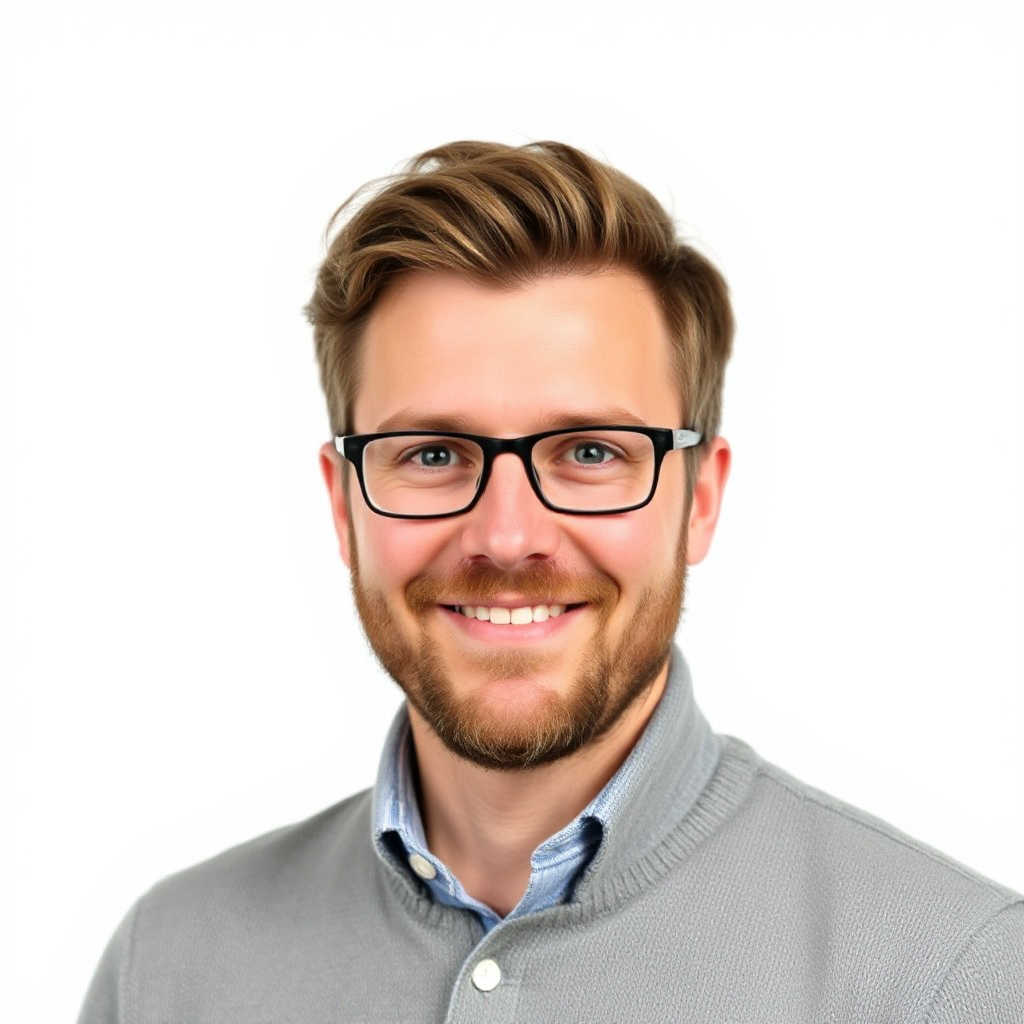
The former US VP Dick Cheney, who died at age 84, was regarded as arguably the most powerful holders of that office in the nation's history. Whereas numerous second-in-commands were limited to minor or figurehead roles, Cheney exercised substantial sway during the presidency of George W Bush, so much so that he was frequently referred to as the "true president".
Bush resented such a characterisation and said the dynamic was more nuanced. He noted that Cheney was deferential, always calling him in official appearances as Mr President, while he addressed him as Dick. Bush challenged even characterisations of their association as a team because it suggested that they were peers. In spite of these denials, Cheney viewed the laidback president pliable on a wide array of governmental choices.
A Aftermath of 9/11
In charge of a contingent of neo-cons that included military head Donald Rumsfeld and assistant defense secretary Paul Wolfowitz, he pushed hard for the military intervention of Iraq in 2003 in reaction to the September 11th attacks on New York and Washington. During of the 9/11 strike, Bush had been taking part in a meeting at a school in Florida. As Bush traveled to a secret bunker in Nebraska, Cheney took charge, commanding the destruction of any unresponsive airplanes heading toward the Capitol building.
Cheney claimed the strikes changed him, causing him to be intent on retribution. In conjunction with other neo-cons, such as Rumsfeld and Wolfowitz, he lobbied for a invasion of Afghanistan in an effort to capture Osama bin Laden. Cheney then strongly advocated for the armed intervention of Iraq, even though there was little proof of Saddam Hussein being involved.
Debated Policies
He showed no remorse about the armed intervention, in which an estimated 100,000 Iraqis died, and not about the harsh treatment of detainees apprehended after 9/11. He informed CNN in 2015 that the Iraq invasion, which was based on inaccurate information echoed by Cheney, was the correct decision. "It proved to be the right thing to do back then. I had faith back then and I maintain that stance today."
However even at the time, there were dissenting voices at a high level about the botched execution of Iraq. One of the White House's own delegates to the Middle East, General Anthony Zinni (2001-03), was not reappointed from the role. "I saw, as a baseline," he later wrote "obvious failure, negligence, and recklessness: potentially, deception, incompetence, and corruption."
Wider Perspective
Cheney was not completely responsible for the Iraq invasion. Before 9/11, Wolfowitz had called for comparable steps. He had composed a document outlining circumstances in which national priorities might be endangered (encompassing "availability of vital raw materials, mostly Persian Gulf oil"). Wolfowitz had argued that "the United States should be prepared to operate alone when cooperative measures prove impossible," specifically referencing defense operations against Iraq.
Bush too had entered the Oval Office somewhat determined on carrying out what his parent had specifically avoided to do in 1991; remove Saddam. After he had been fired by the president, the treasury secretary Paul O'Neill recounted how, at the first meeting of the National Security Council in January 2001, Bush had declared his objective of diminishing America's engagement in the Israeli-Palestinian conflict and suggested defense operations against Iraq.
Bush held a individual resentment against Saddam, convinced he had been involved in a plot to kill his father, President George HW Bush, on a journey to Kuwait in 1993. He also resented that one of the largest establishments in Baghdad had a floor mural with a portrait of his parent's countenance that all visitors had to walk over.
Questioning Techniques
However it was Cheney who was part of the most vehement behind attacking Iraq, consistently quoting intelligence reports that were whether weak or entirely inaccurate. He supported what the Bush government politely called as "intensive questioning", the application of waterboarding and torture.
Responding to a Senate report in 2014 that found that no actionable intelligence had been obtained through the torture, Cheney dismissed the report as "riddled with crap". He told Fox News: "We asked [the CIA] to take steps and put in place initiatives to capture the perpetrators who murdered 3,000 of us on 9/11 and guarantee it was not repeated. That is precisely what they did and they deserve a lot of credit."
External Perception
Cheney took pleasure in labels imposed on him by detractors such as the dark character and the dark figure, and by the idea that he was a sinister influence directing Bush. In the journalist's 2013 book about the two, Days of Fire: Bush and Cheney in the White House, Cheney is quoted as saying: "Do I represent the evil genius in the corner that operates invisibly come out of his lair? It's a advantageous way to operate, truthfully."
Commercial Ties
Dispute over his corporate affiliations accompanied him throughout his time as vice-president. While he had minimal expertise in commerce but good contacts in military, notably in Saudi Arabia, he was asked to become part of Halliburton, one of the world's biggest energy conglomerates, in 1995 as leader and chief executive.
In 2000 he assumed the role of Bush's running mate for the executive branch. Debatably, during the conflict in Iraq, Halliburton was given US contracts worth substantial sums.
It significantly boosted his finances. His yearly earnings during his time at the company grew from his $258,394 while Pentagon chief to $4.4m. When he left in 2000 he had a compensation package totaling in excess of $20m|twenty
